Elliot Washor's TGIF 07.24.2026
- Elliot Washor

- 5 days ago
- 5 min read
The Slow Waltz
This year's personal theme for Big Bang was The Slow Waltz.
The composition refers to a way of approaching life. This time I used it to guide me through the conference. I took my time. Maybe it was the Texas heat, or maybe it began with Taylor opening the conference by introducing BPLiving's Lifestyle Measures, but everything seemed to move at just the right pace. Nothing felt rushed. Conversations lingered. People had time for one another.
I loved it, and judging by the smiles around me, so did everyone else.
It's always wonderful to reconnect with old friends and make new ones, but what struck me most this year was the number of students woven into every part of the conference. They weren't simply attending—they were leading, presenting, questioning, creating, and shaping the experience. A special shout-out to Joshus and his crew for making that happen.
A few highlights...
On Sunday evening I met Dennis for his birthday and we walked to dinner. Whenever I visit a new city, my first destination is almost always a park. This time it was Klyde Warren Park, built right over the expressway. We had visited it on our scouting trip to Dallas, and I couldn't wait to return. Ironically, a similar idea is being discussed for the South Bronx.
We arrived around 9:00 p.m., and despite the heat, the park was alive. Hundreds of people were picnicking, talking, playing, and simply enjoying the evening together.

Two moments stayed with me. The first was watching children—and just as many adults—running through the giant illuminated sprinklers to cool off. The second was Dennis making his way through the crowd and getting a knowing nod from someone because of his Pura Vida Costa Rican shirt. Small moments. Human moments. Exactly how I always hope to feel in a public park.
After dinner we wandered over to the Asian Art Museum's open-air exhibit, where I reunited with one of my favorite beasts.


After Dark hit a small snag when Shameka's flight was delayed, but Meisha stepped in beautifully as MC. I'm never quite sure what my role is during After Dark—and maybe that's exactly the point. When Shameka finally arrived, though, the room somehow became even more alive. The evening's theme, "What keeps you up and what gets you up?", gathered even more momentum. Another memorable night.
Clicks and Flicks
One of the highlights of our Clicks and Flicks session was hearing from Francis, Charlie and Jen Ghidu reflect on the movie clips they had selected. Their insights were thoughtful, funny, and honest.
It was one of those moments where adults and young people were truly on equal footing. That's Big Picture Learning at its best.
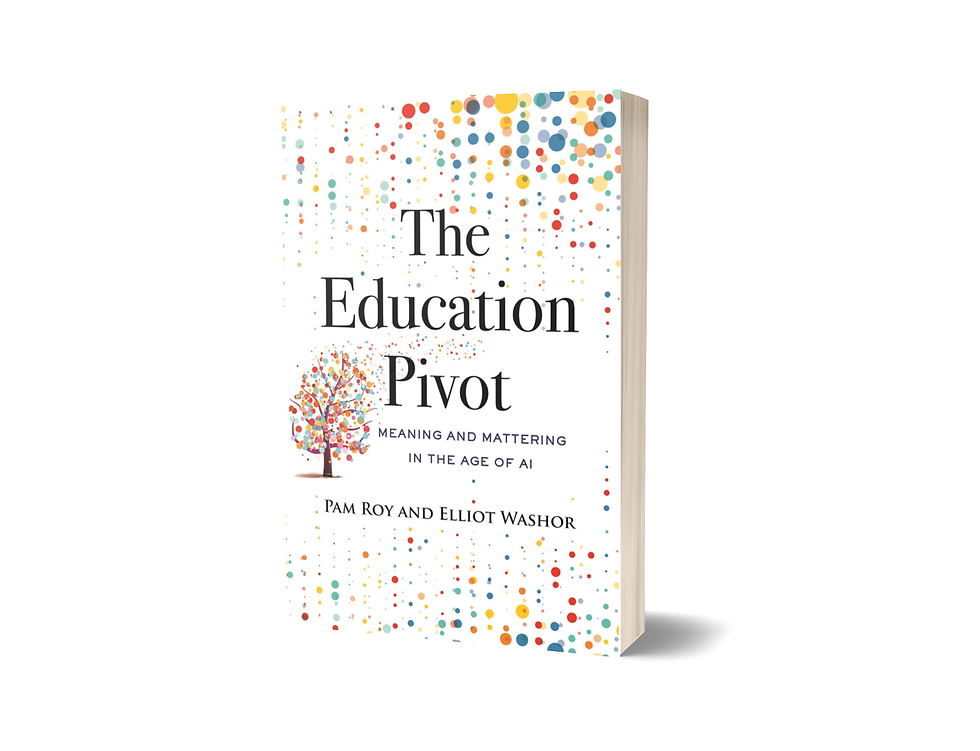
Our session on The Education Pivot: Meaning and Mattering in the Age of AI also went really well.
We intentionally limited the group to fifty people so every voice could be heard and so we could gather thoughtful feedback about different interactive ways to present the book. After Pam and I shared why we wrote it, Sonn, Pam, and I each facilitated smaller workshops while Masson collected video.
My group explored mattering as an antidote to the "isms" of standardization and perfectionism. After introducing the idea that Mad Libs are, in many ways, part of the evolutionary story that leads us to AI, we had a rich discussion about what AI is revealing—not simply about technology, but about what's broken in our educational system. The activity opened up conversations about how mattering offers an alternative to systems built around standardization.
Before the conference I asked Dennis to read the manuscript. Here's what he wrote:
The Education Pivot is an important book for this moment. Drawing on Viktor Frankl's philosophy of meaning and purpose, it explains in a clear, commonsense way what is wrong with our education system—and, more importantly, what needs to be done. It begins with changing ourselves and then supporting the broader changes our education system requires.
As co-founders of The Met and Big Picture Learning, we have seen what can happen when students gain a genuine sense of purpose, value, and belonging. This book broadens our understanding of why this work matters and why these ideas must be expanded.
Sir Ken Robinson once said, "If schools were a business, they would be out of business."
Now is the time to seize the moment. AI is exposing the faults in our current system, and we must be ready to move forward with hope, purpose, and a renewed commitment to what matters most.
Receiving feedback like that reminds me why Pam and I wrote this book in the first place.
Willie Nelson and Big Picture Learning
Then it was off to Scott's session connecting innovators to Big Picture Learning.
For more than twenty years, Scott has created conversations that help us see our work through unexpected lenses. Since we were in Texas, this year's guide was Willie Nelson.
Scott explored how Willie has always worked from the edge toward the middle, bringing together people who otherwise might never have found common ground. It's a lesson Big Picture Learning has been practicing for thirty years.
Another terrific session.
Building What Lasts
One conversation I absolutely loved centered on Andrew's upcoming audio series, The Advisory.
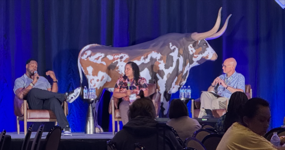
I think this project is going to strike a deep chord with schools that desperately need ways to truly know their students.
The series follows one advisory over more than twenty years. How many educators can look back across two decades and see the lasting relationships, friendships, joys, heartbreaks, and lives that have grown from simply staying together?
Shouldn't every young person have something like that?
Adding even more depth was having Natasha—one of Andrew's former advisees—join Carlos on stage. Carlos had the adjoining advisory and knew all of these students. Today they're Big Picture Learning's Co-CEOs.
You couldn't plan that if you tried.
And that's exactly the point.
If stories like these don't convince schools to move toward advisories, I'm not sure what will.
More to come on that.
As Big Bang came to a close, I found myself returning to my theme of The Slow Waltz. We often talk about moving fast, scaling up, disrupting, accelerating. But the things that matter most—trust, friendships, meaning and mattering, craftsmanship, and learning—don't happen that way. They unfold over time, one conversation, one relationship, one experience at a time.
Maybe that's what this year's conference reminded me of. The future isn't built in a sprint. It's built in a slow waltz, where we pay attention to one another, leave room for surprise, and move together with intention.
Thank you, Katrina, and everyone who made Dallas feel so welcoming. You created a conference that reflected exactly what we talk about all year—relationships, joy, and the patient work of building something that lasts.
Until next year's dance.
Be well.
El


Comments