Elliot Washor's TGIF 03.27.2026
- Elliot Washor

- Mar 27
- 3 min read
Are You With Me Now? A. J. Ryder
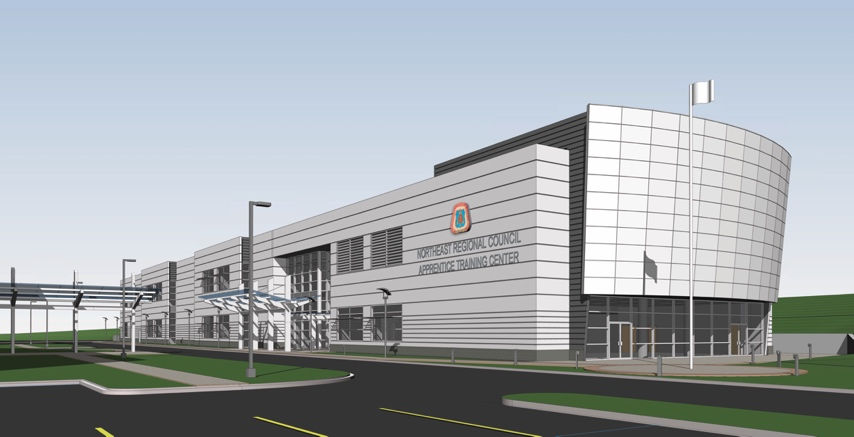
This was a week of shuttle diplomacy. I flew from San Diego to Newark, back to San Diego, then to Washington, D.C., and finally home again. Along the way, I learned a great deal about the skilled trades and college admissions.

My first stop was the Carpenters Training Center in Edison, New Jersey. There are 260 such centers across the U.S., but the one Charlie, Mychal, and I visited stood out: a 100,000-square-foot facility with classrooms connected to expansive, state-of-the-art workspaces, along with conference rooms and an auditorium. The design reflected its purpose—form truly followed function.
Apprentice carpenters work full-time while taking courses that can earn up to 65 college credits. By completing two courses per rotation, they can graduate with a fully paid four-year degree—all while being paid to learn. There are no fees for these credits, and the opportunities extend into multiple career pathways within the field. Apprentices start at $28 per hour with benefits, and within four years can earn around $118,000 annually. By age 23, they have no college debt and a solid career.
But the most important piece is this: the work is meaningful. There is a true sense of community. Apprentices are doing something they care about, developing skills through both formal study and relationships with experienced professionals.

We also continued a conversation about supporting carpenters who want to transition into teaching. These talks started during our 311 program—a spinoff of Harbor Freight Fellows. This would mean training CTE teachers in new ways, including getting students out onto job sites during high school to learn alongside working carpenters. This work is helping the skilled trades sector begin to embrace the IBPLC for both out-of-school learning credit and their time in college classes.
Back home, Karla, Eunice, Katrina, Anthonette, and Carlo hosted BPL’s Ashé Fellows—for an evening gathering. Then it was back on a plane to meet Andrea at the National Association of College Admissions Counseling Innovation Conference (NACAC).
NACAC, with its 28,000 members, brings together high school counselors and college admissions officers to rethink their work. There is a growing recognition that the current admission system is not working for anyone—and that it needs serious innovation.
Peter Ross, Director of Youth Thriving Through Learning, is leading this effort by funding and convening these groups. His keynote captured the challenges clearly—playful, thoughtful, and serious all at once. Notably, he highlighted IBPLC as a key innovation to watch. Andrea and I couldn’t be more encouraged.
There is still much work ahead—in practice, research, and policy—but we are in the room, with visibility among both K–12 and higher education leaders.
Reflecting on the week, one idea stands out: groups across the spectrum—from carpenters to college presidents—are all talking about purpose, meaning, mattering, and performance. yet they are missing each other entirely.
Ironically, the group most grounded in performance and rigor—the carpenters—is not seen as “rigorous” by higher education. Yet their work is deeply academic and performance-based. The fact that carpenters are earning college credit is a step in the right direction.
Years ago, during my time with the Coalition of Essential Schools, I often said that the most rigorous performance assessments I saw were in the Coalitions CTE schools—like Hodgson in Delaware—and in places like the North Carolina School of Science and Math. In both settings, students were building and creating similar things, but the schools were labeled differently. That’s marketing.
In both cases, the core assessment was authentic performance. Whether students succeeded or failed, they were learning—alongside skilled adults—through meaningful work where the stakes were high and they were pegged to real-world standards. Some CTE students became engineers; some science and math students became mechanics. What mattered was that they all learned by doing.
Perhaps colleges will rediscover the importance of moving from concrete to abstract learning. At NACAC, that shift wasn’t yet visible—but the carpenters already understand it, and their new messaging reflects that.
“We don't make construction workers; we build skilled professionals.”



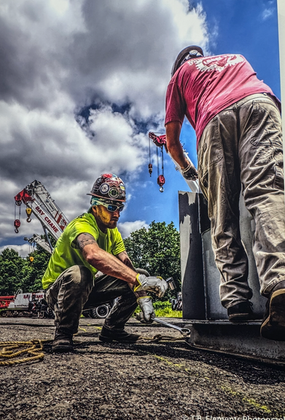
There are important lessons here—if these worlds can truly connect.
One more thing….
At the NACAC conference, I continued to hear the idea that Thriving = Earning + Career. This feels fundamentally off. What if thriving is not an outcome, but a process of becoming? What if we measured it based on meaningful work and what truly matters to each individual?
If we did, we might build a very different education system.
Next week, I’ll be at the Deeper Learning Conference in San Diego where I’ll be talking about the IBPLC and internships connected to our California Secondary School Redesign work, then heading to Providence and Boston for meetings at The Met and MIT.
Be well.


Comments